You start before you're ready
“So, um, yeah…” eats the first line. A breath and a real first word make people lean in.
Some of the moments that matter most aren't at work. The toast at a wedding, the story everyone turns to you for, the conversation you've been putting off. Say it out loud first, hear how it lands, and change one thing.
Starts with your free Voice Snapshot: one minute of you talking about a life moment, measured. No account needed.
WHAT USUALLY GOES WRONG
“So, um, yeah…” eats the first line. A breath and a real first word make people lean in.
The point arrives after everyone has stopped listening. Starting with the hook keeps the room with you.
When it matters, you rush. Slowing down and pausing makes a difficult sentence sound calm and kind.
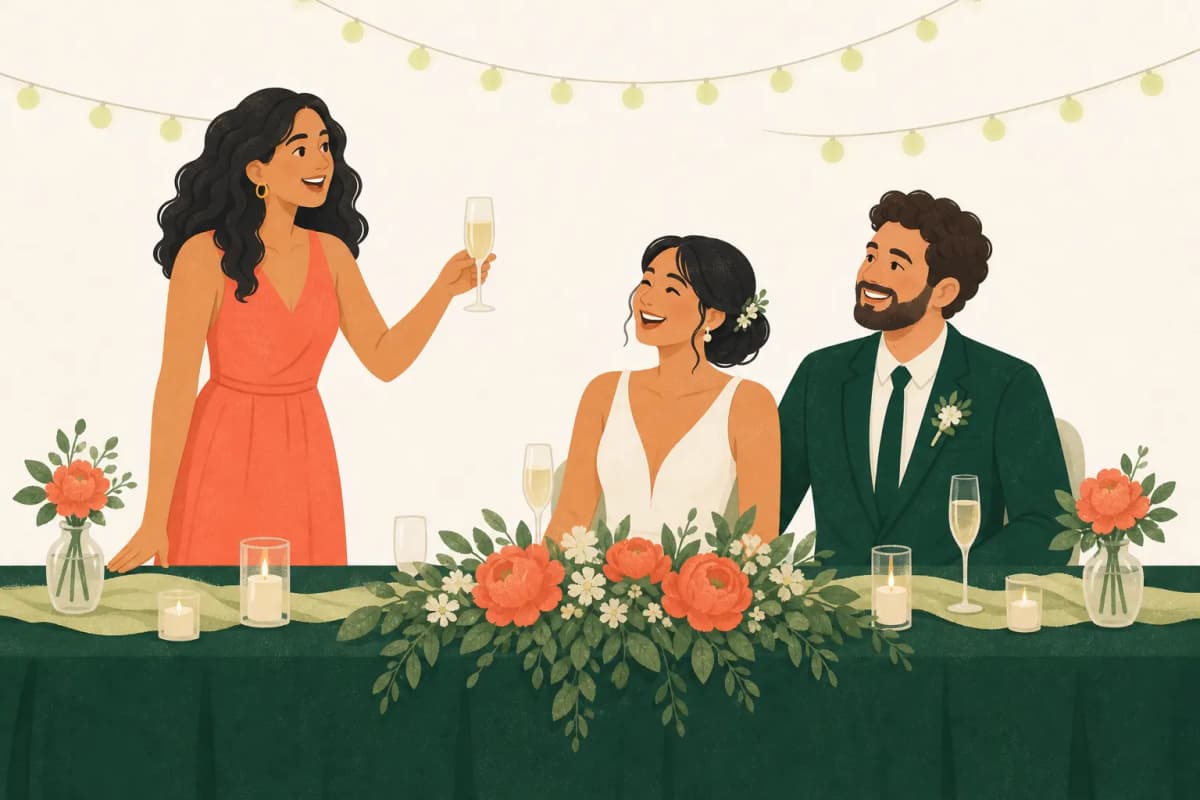
Two to three minutes is the usual advice for a toast (Toastmasters). At 130–150 words a minute, that's roughly 260–450 words. A best man speech tends to run longer: one UK wedding guide suggests four to five minutes, or about 550–700 spoken words (Bridebook).
10–15 seconds
One line is enough. Start with a moment rather than “For those who don't know me…”.
60–90 seconds
Something short and kind that shows what they're like. One vivid detail does more than five jokes.
20–30 seconds
This is where people go quiet and listen. Slow down and let it be warm.
About 10 seconds
Stand tall, raise your glass and say their names clearly. Then sit down.
Say it like this
Please raise your glasses.
To Sam and Alex.
For a best man or maid of honour speech, add a second story and a short bit about how the couple met before the sincere part. Leave out exes, stag-weekend stories and private jokes. A good test: would their grandparents smile?
I met Sam on our first day at university, / when he knocked on my door to borrow a corkscrew / and stayed for six hours.
It starts in a moment, so the room is with you from the first line. Pause after “corkscrew” and let “six hours” land.
Most stories wander because they start at the beginning: what day it was, who was there, why you were going. Start in the moment instead, add one detail people can see or hear, and finish with why it mattered.
The car stopped halfway up the mountain.
My dad got out, looked at the engine, / and said, very calmly, / “Well. We're walking.”
It took us three hours to reach the top.
It was the best day of the whole trip.
Pause just before the funny or important line, and let a quote sound like the person who said it.
Instead of“So this was, um, 2019, I think, and we'd rented a car…”
Try“The car stopped halfway up the mountain.”
Instead of“And then lots of other stuff happened…”
TryOne detail: “He said, very calmly, ‘Well. We're walking.’”
Instead of“…anyway, yeah, it was funny.”
Try“It was the best day of the whole trip.”
Hard conversations often go wrong in the first ten seconds. We rush, or bury the point under softeners and reasons. Plan your first sentence, say it slowly, and let it be heard.
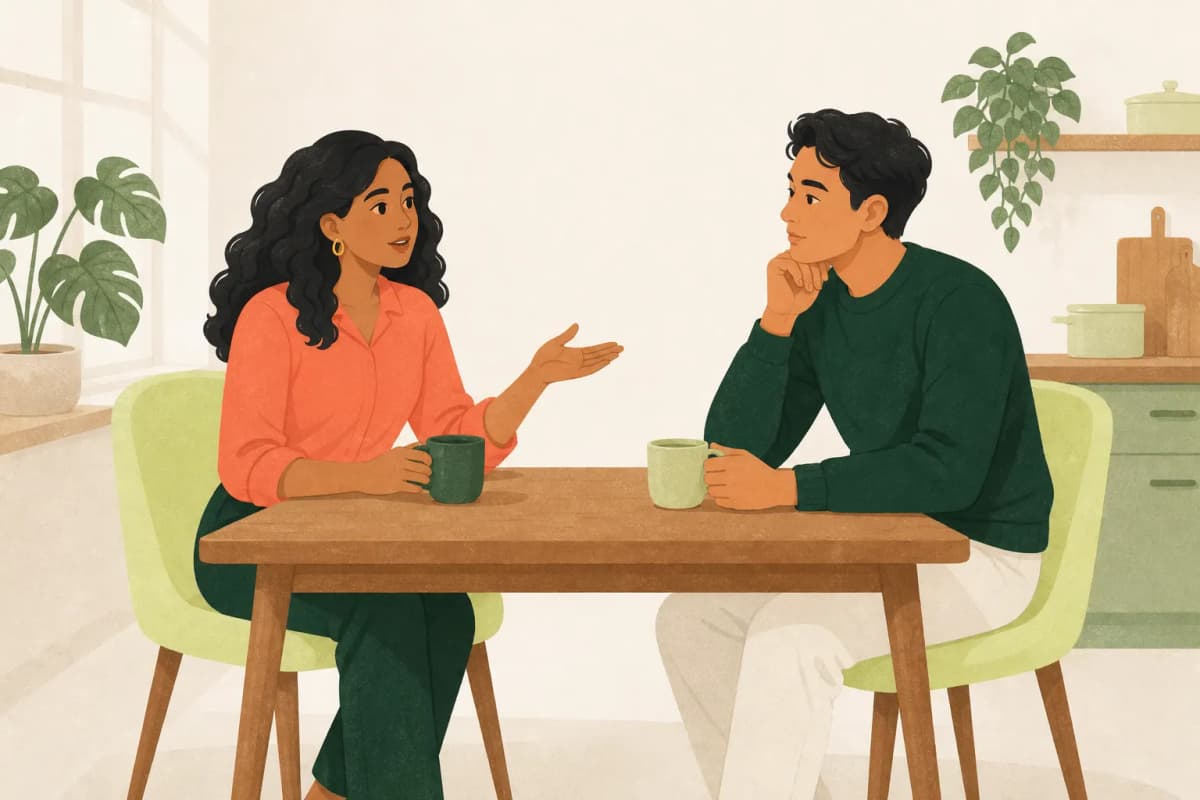
I'd like to talk about the weekend plans. / Something's been bothering me, / and I'd rather say it than let it build up.
Practising the first minute out loud helps a lot. The app can't tell you what to say to someone you love, though, and it's no substitute for professional support if a conversation feels unsafe.
This is one of the hardest things to say out loud, and nobody expects polish. A few things tend to help.
If you'd like to practise in the app, take it in sections of up to 90 seconds. Go gently, and take as many breaks as you need.
WHAT PRACTICE LOOKS LIKE
Each rep is two short takes: one to hear where you are, one after a single cue from your coach. Chapter 1 is free; later chapters are part of Pro.
Chapter 1 · The Mirror
The rep asksTell someone about the best thing that happened to you this week.
Chapter 6 · Story
The rep asksTell a story about a trip where something went wrong. Start at the moment it did.
Chapter 4 · Melody & Tone
The rep asksA friend wants to cancel plans for the third time. Be warm about it, then firm about a new date.
Chapter 9 · The Room
The rep asksYour partner or friend wants to book something you think is a bad deal. Say so.
Chapter 10 · Showtime
The rep asksGive a toast at a friend's birthday or wedding.
WHAT YOU'LL PRACTISE
Pace, pauses, fillers, melody and punch are measured on every take, and your coach quotes your own words. How it works
Takes in the app run up to 90 seconds. For a toast or speech longer than that, practise each part on its own, then do full runs with your phone's voice recorder and a timer.
A week before
Write it out and read it aloud with a timer. Cut until it fits, then cut one more line.
Days 2 to 4
Rehearse one part per day in the app: the opening, then the story, then the ending and the toast line. Start with your free Voice Snapshot.
Day 5
Record the whole thing on your phone, standing up, with your cards. Listen back once.
Day 6
Say it to one person. Ask them only what they remember.
On the day
The free “Before your big moment” routine. Have water nearby, and save the drink for after the speech.
GUIDES, TOOLS AND QUIZZES
Two to three minutes is the usual advice, which is about 260–450 words at a comfortable pace. A best man or maid of honour speech can run longer, often four or five minutes.
About 390–450 words at 130–150 words a minute. Your own pace might be faster or slower, so time yourself reading it aloud, or use the speech time calculator.
Yes. Cards or a printed page in large type are fine, and much easier to handle than a phone. Look up for your opening line and for the toast.
Pause, breathe, have some water and carry on when you're ready. People understand, and they will wait for you.
With one calm sentence that names the topic and why it matters to you. Then pause and let them respond. Plan that first line in advance and say it out loud a couple of times.
Not in one take. Takes are capped at 90 seconds, so rehearse in sections: your opening, your story and your ending. Do full runs with a timer on your phone.
Record one answer now and see what your listeners will hear.
Rehearse my momentAlso: Meetings · Interviews · Presentations